
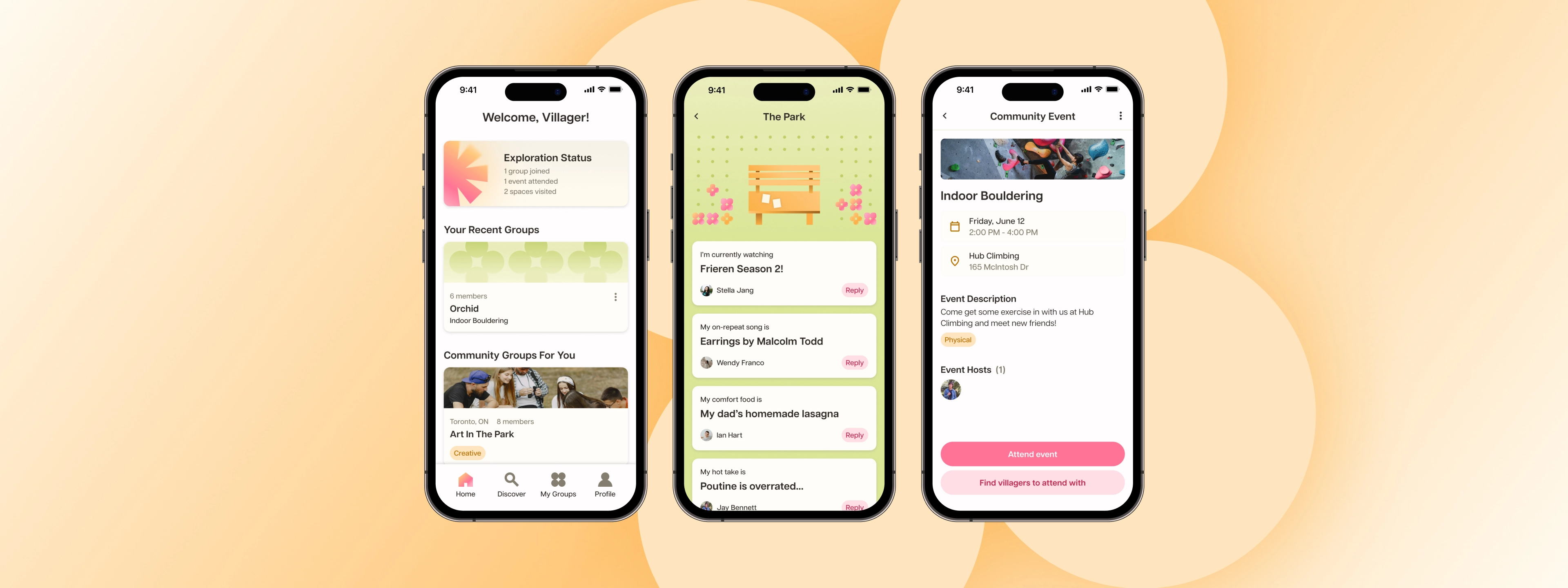
Creating digital communal spaces to connect youth to in-person communities.
Product designer, UX researcher, brand designer
7 months
There's a growing problem in youth communal spaces.
As appealing ways to satisfy youth desire and need for connection, social media and other digital platforms can interfere with day to day life and social relationships.

Loneliness rates in youth are significant.
Between 17–21% of individuals aged 13-29 reported feeling lonely, with the highest rates among teenagers (World Health Organization 2025 global report)
Their problematic social media use is also high.
40% of adolescents are classified as having problematic social media use or are at moderate risk (2018 study on Health Behaviour in School-aged Children)
So why are youth turning to digital platforms?
In this crucial period of social development, barriers prevent youth from accessing the physical spaces that fulfill their need for connection.
I tested my hypothesis that youth are struggling with finding in-person communities through a survey.
I conducted an anonymous survey with 19 participants aged 18 to 24 with the goal of understanding their community preferences and experience finding communities.

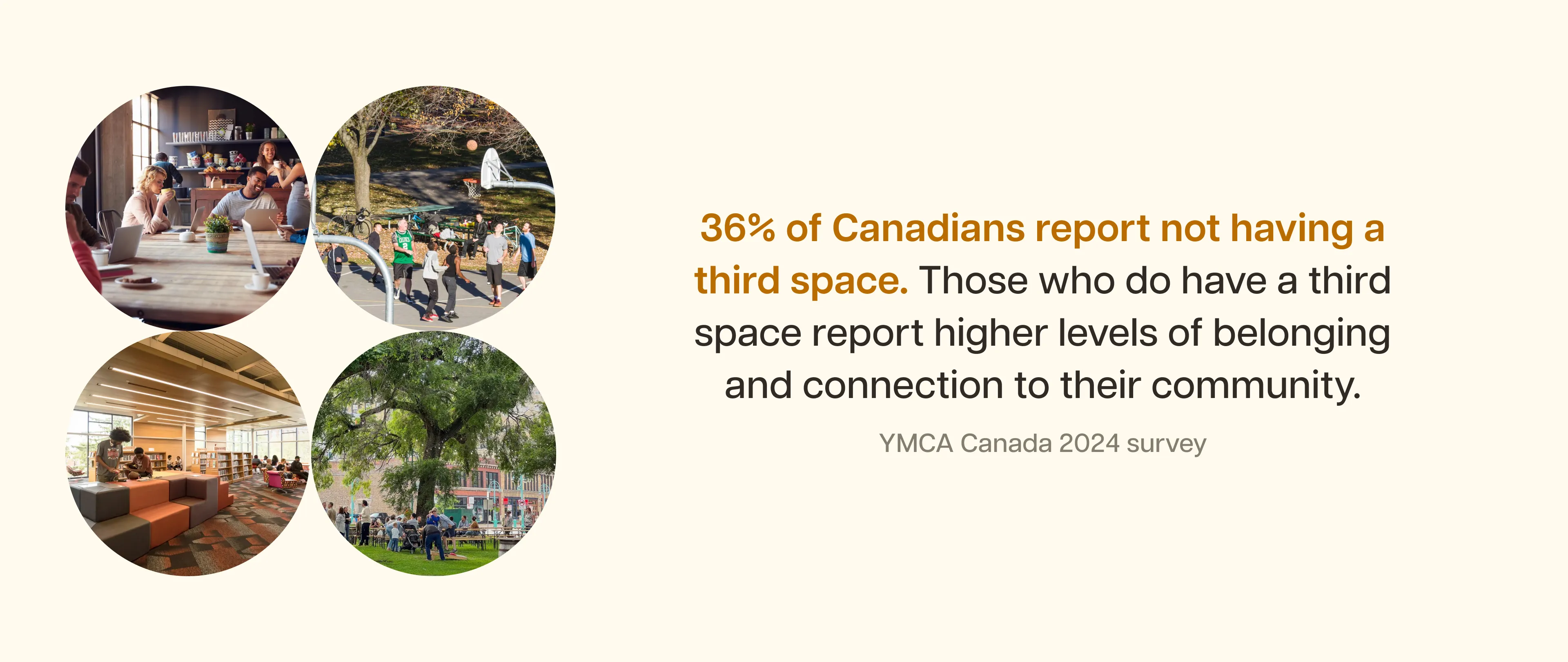
There's a lack of accessible physical communal spaces and awareness of such spaces.
53% of participants preferred engaging in in-person communities but noted the lack of outreach, which is often from friends.

Pandemic isolation and community incompatability makes it difficult to join in-person communities.
The majority of participants mentioned distance, age of communities, and personal introversion as drawbacks.
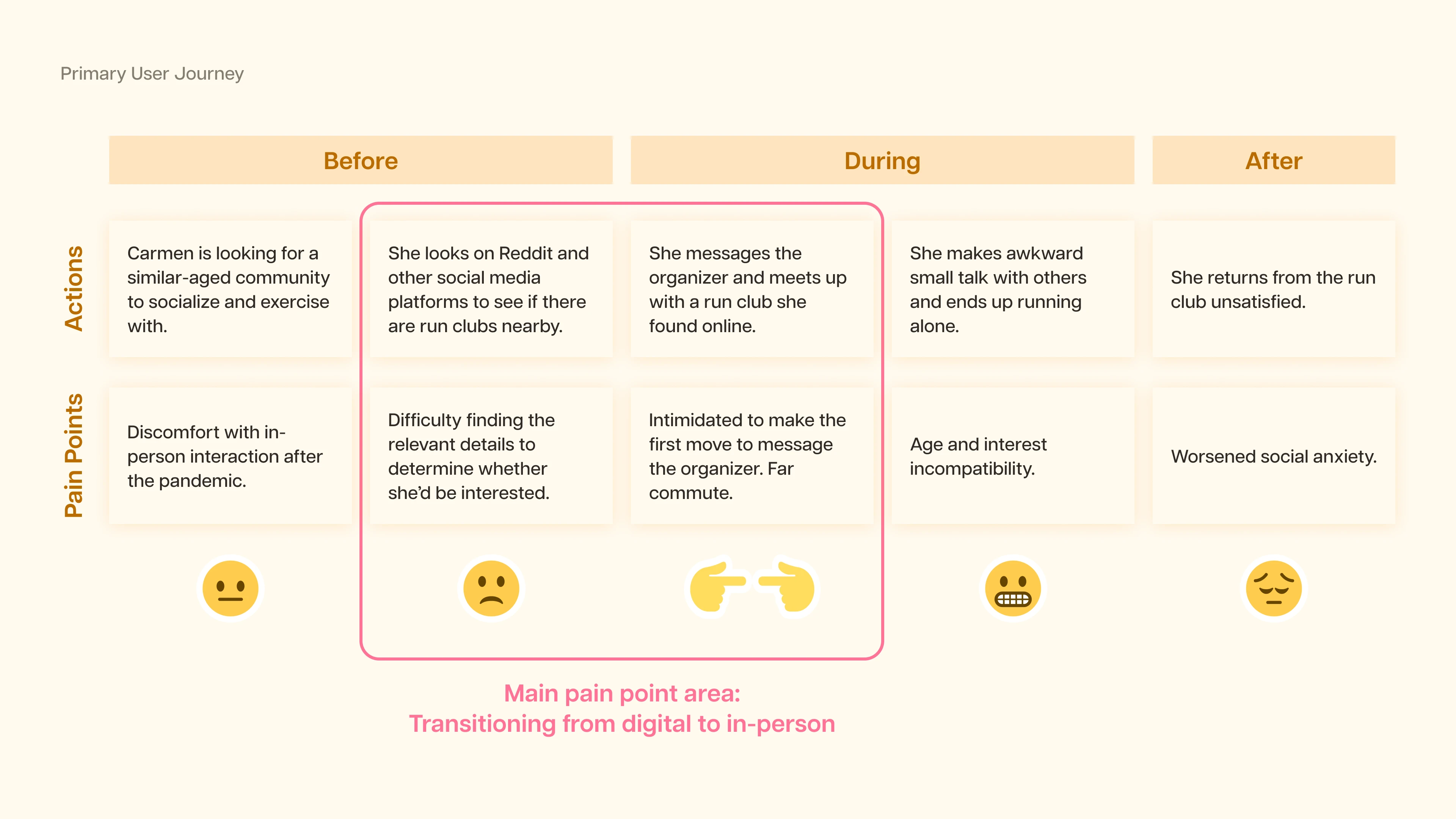
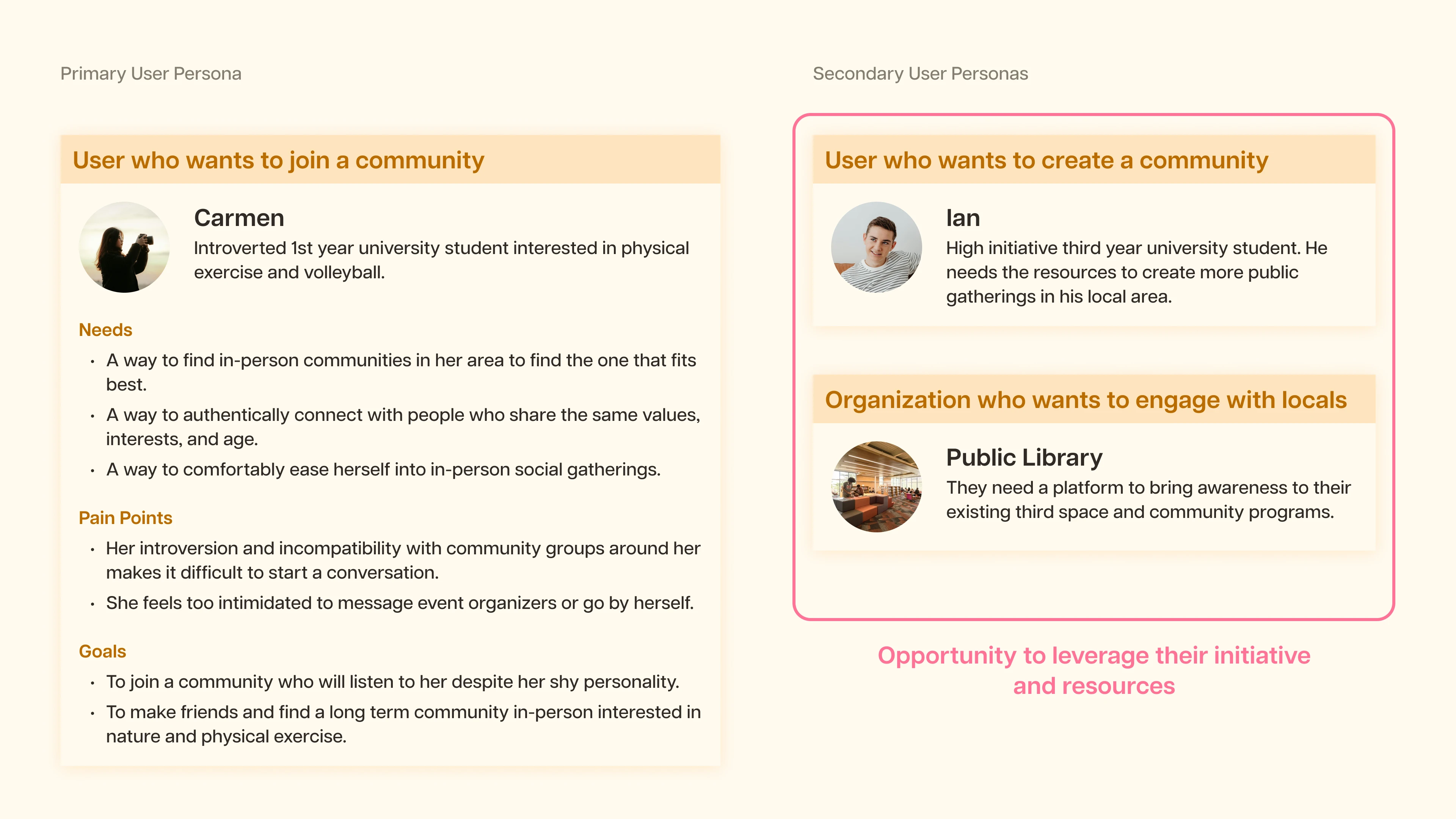
Participant responses revealed the main pain points and needs of youth.
The experience of the primary user group presents issues with searching and joining a compatible community. Identifying secondary user groups also reveal opportunities to leverage their strengths to support the pain points of the primary user group.
Existing platforms also struggle to fully accommodate users searching for connection online.
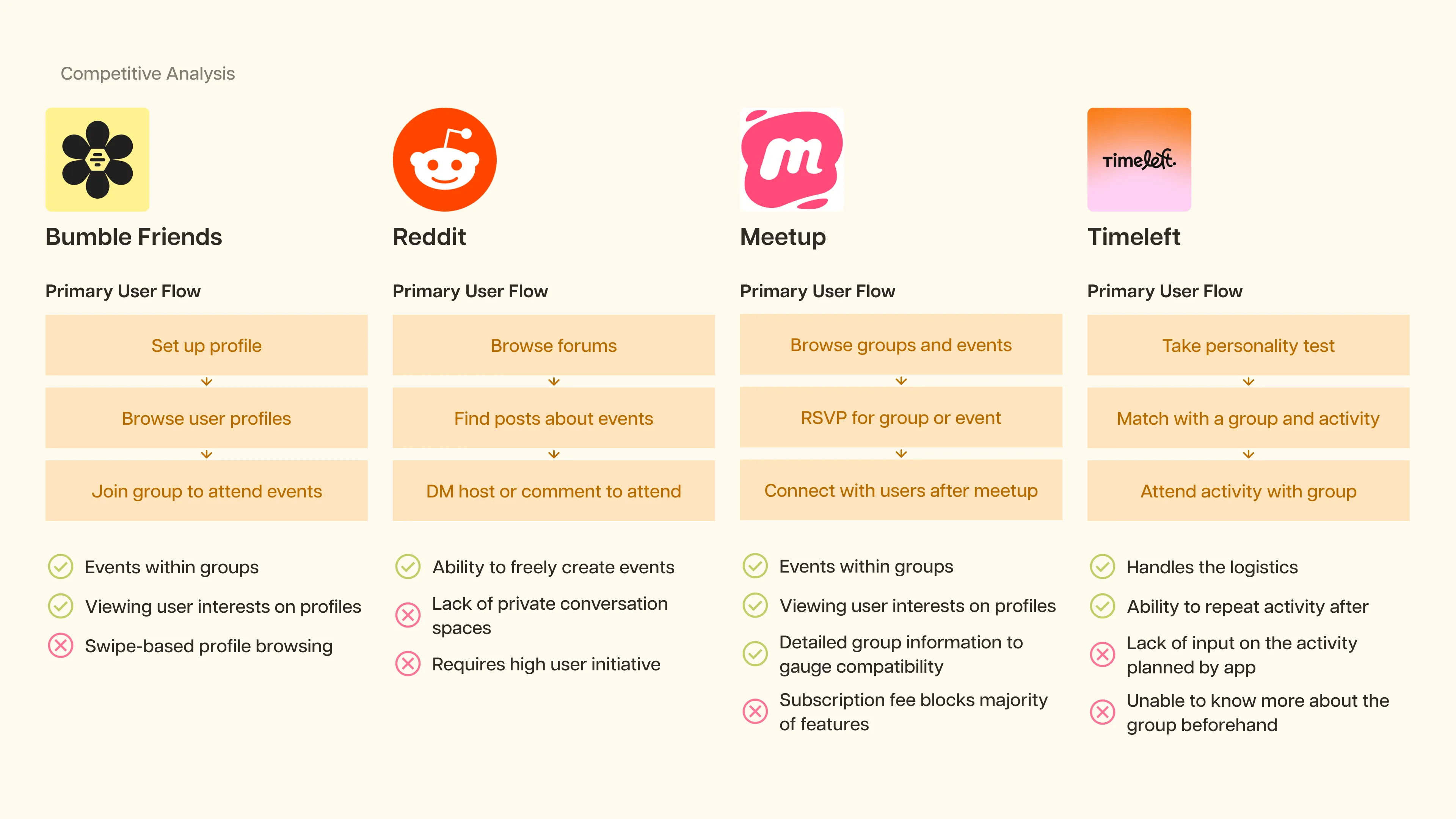
I looked into the platforms used to find in-person communities, conducting a competitive analysis and seeing what solutions youth are coming up with.
Most friendship or community building platforms feel inauthentic or intimidating.
Swipe-based apps feel shallow while forum platforms require a level of self initiative that people may not be ready for.
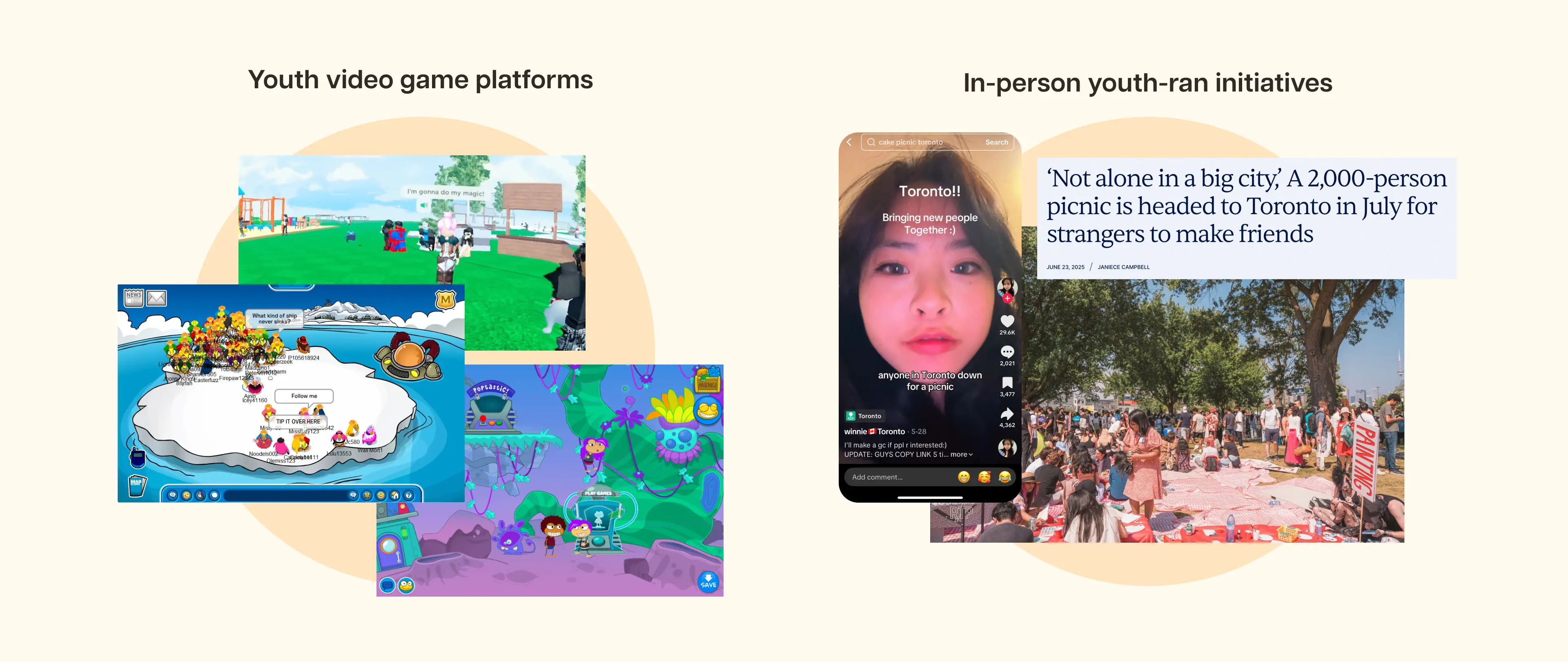
Youth have the desire and ability to form communities, they just need the right resources.
Over the years, youth have been finding methods of building community through digital means and social media.
Nothing seems to fully help.
My research presented pain points and high likeliness for user drop-offs in the existing methods of joining in-person communities through digital means.
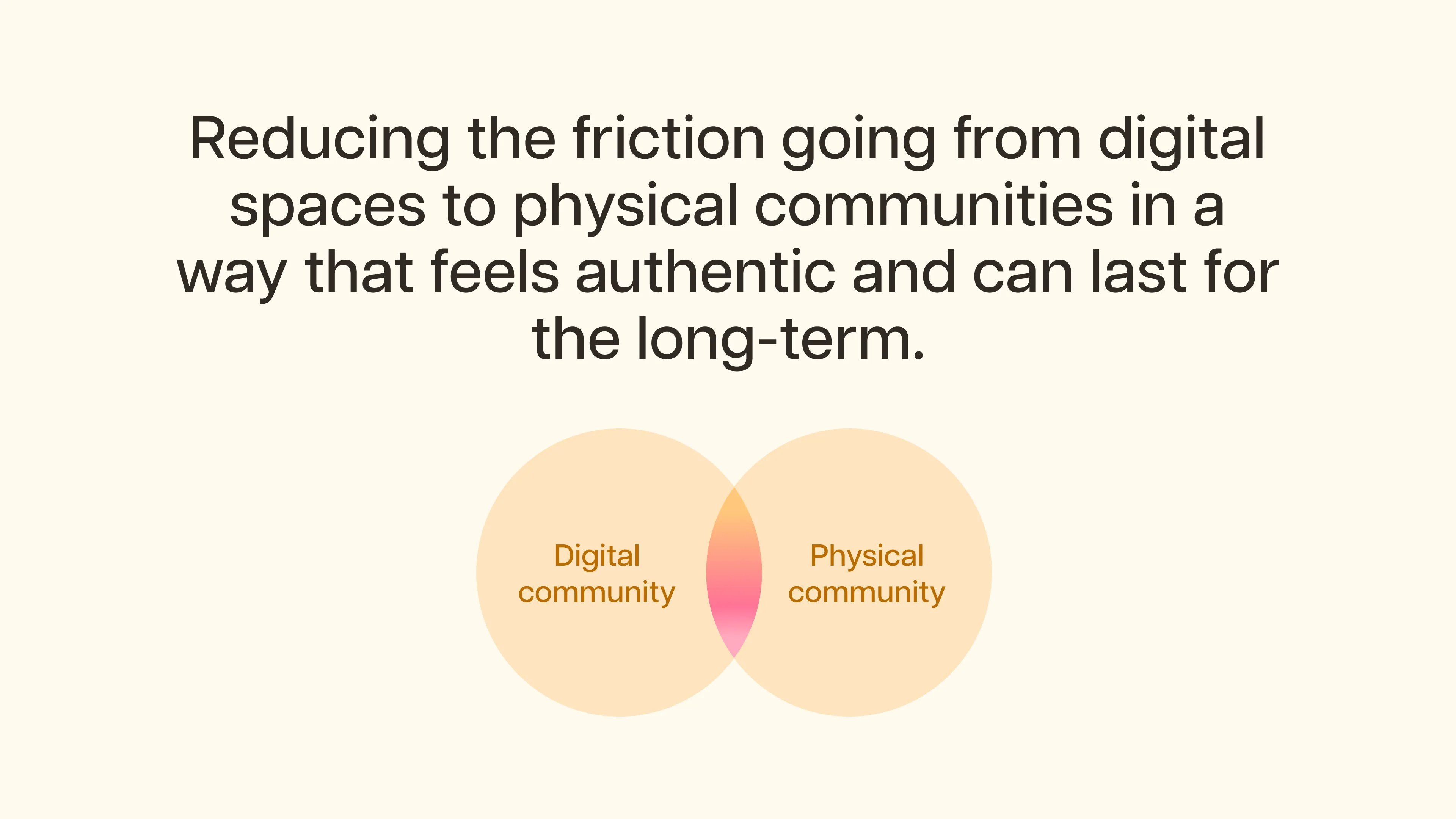
This reveals an opportunity to support youth by...
While ideating, I prioritized two main items.

Address user needs.
Ensuring key user needs are met to better connect users to community.

Support users long-term.
Ensuring communities have the resources for longevity and users are supported beyond community discovery.
Therefore the approach also needed to account for user needs and long-term support.
While there were other initial approaches, the solution that focused on natural growth best accounted for all the factors that affect users finding in-person community.
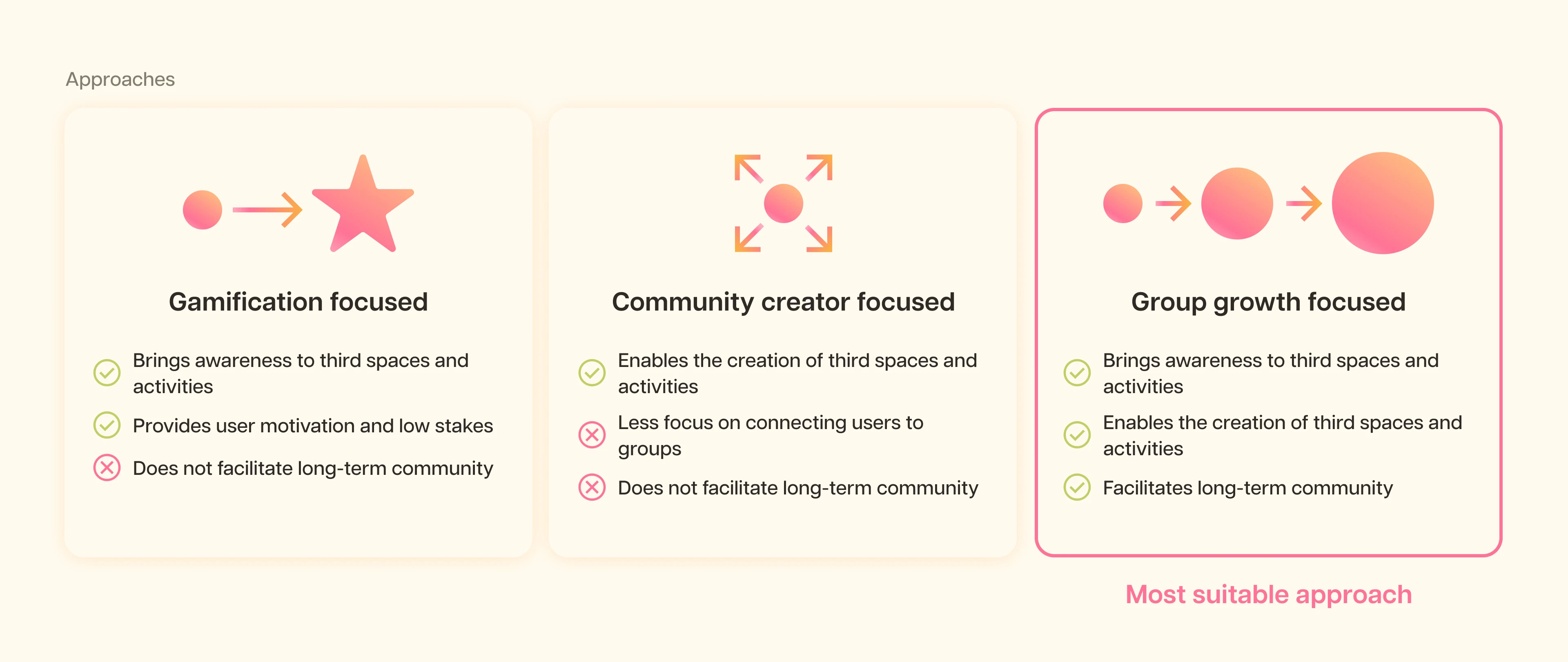
I looked at how the main feature could help youth going from the digital to physical.
With a group growth focused approach, this user flow allows groups to be formed and naturally grow into larger communities, bringing people directly to third spaces.
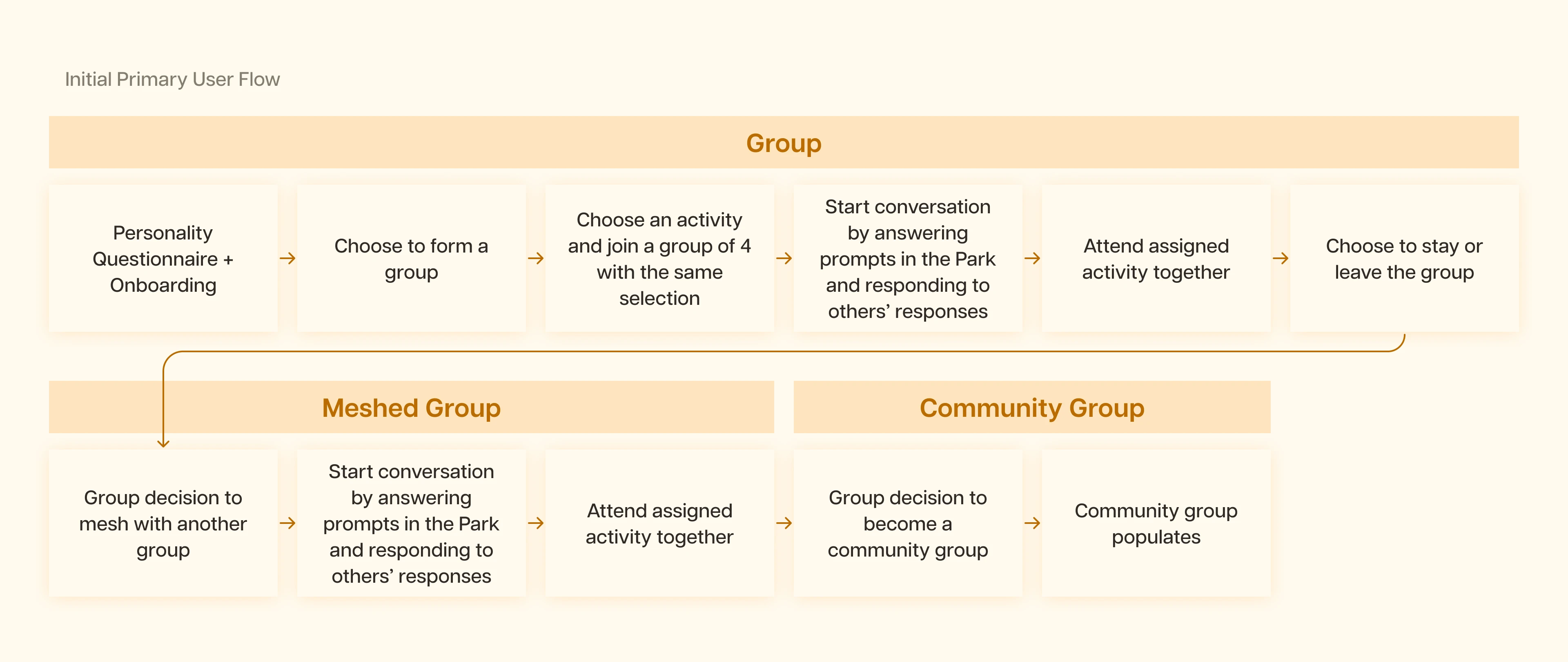
While it offered a solution, the initial design didn't fully reduce the friction.
Through usability and A/B testing, I found that choosing to join a group first before choosing an activity became a pain point. Along with other user feedback, I made revisions that reduced barriers and accounted for edge cases.
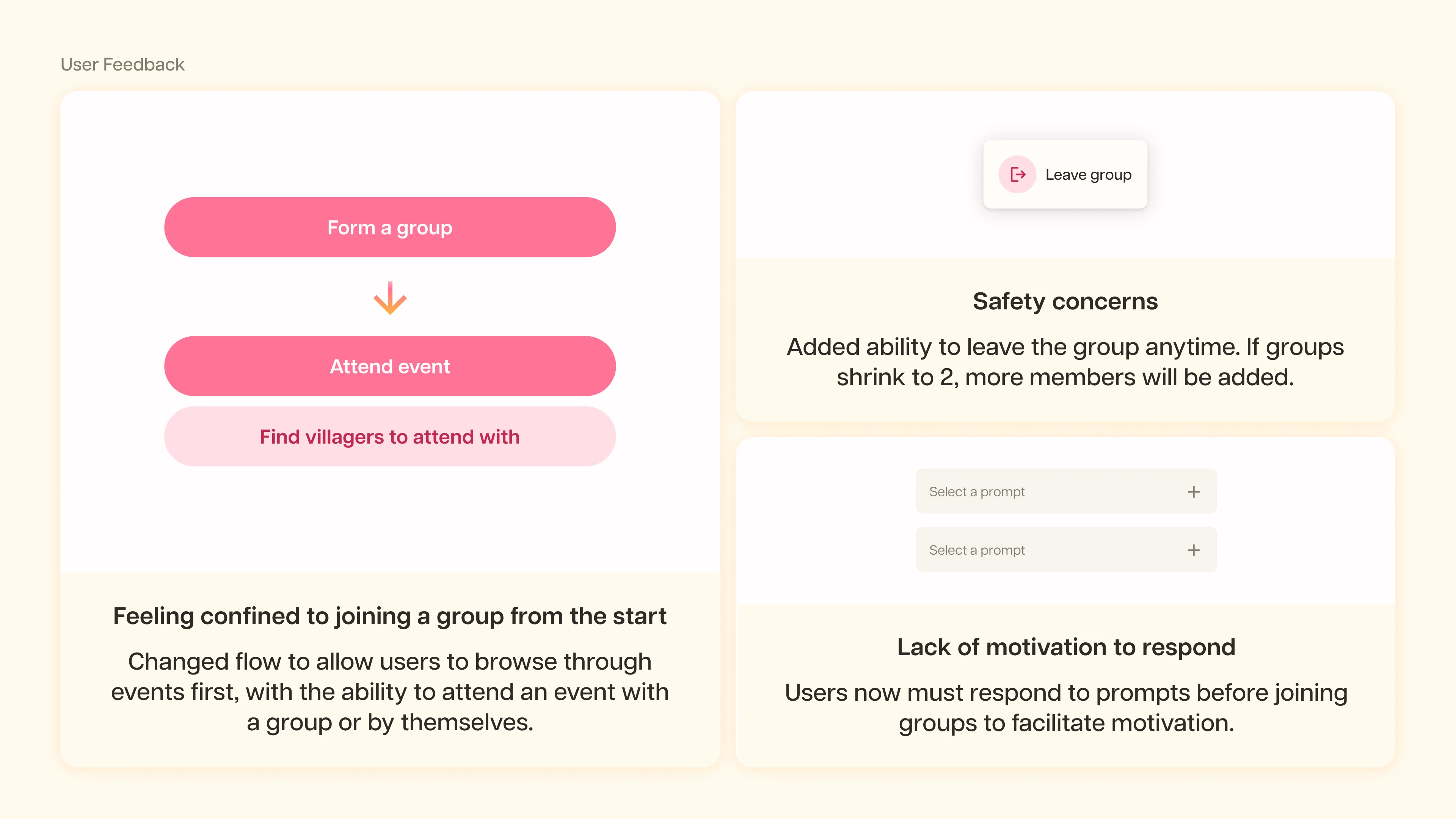
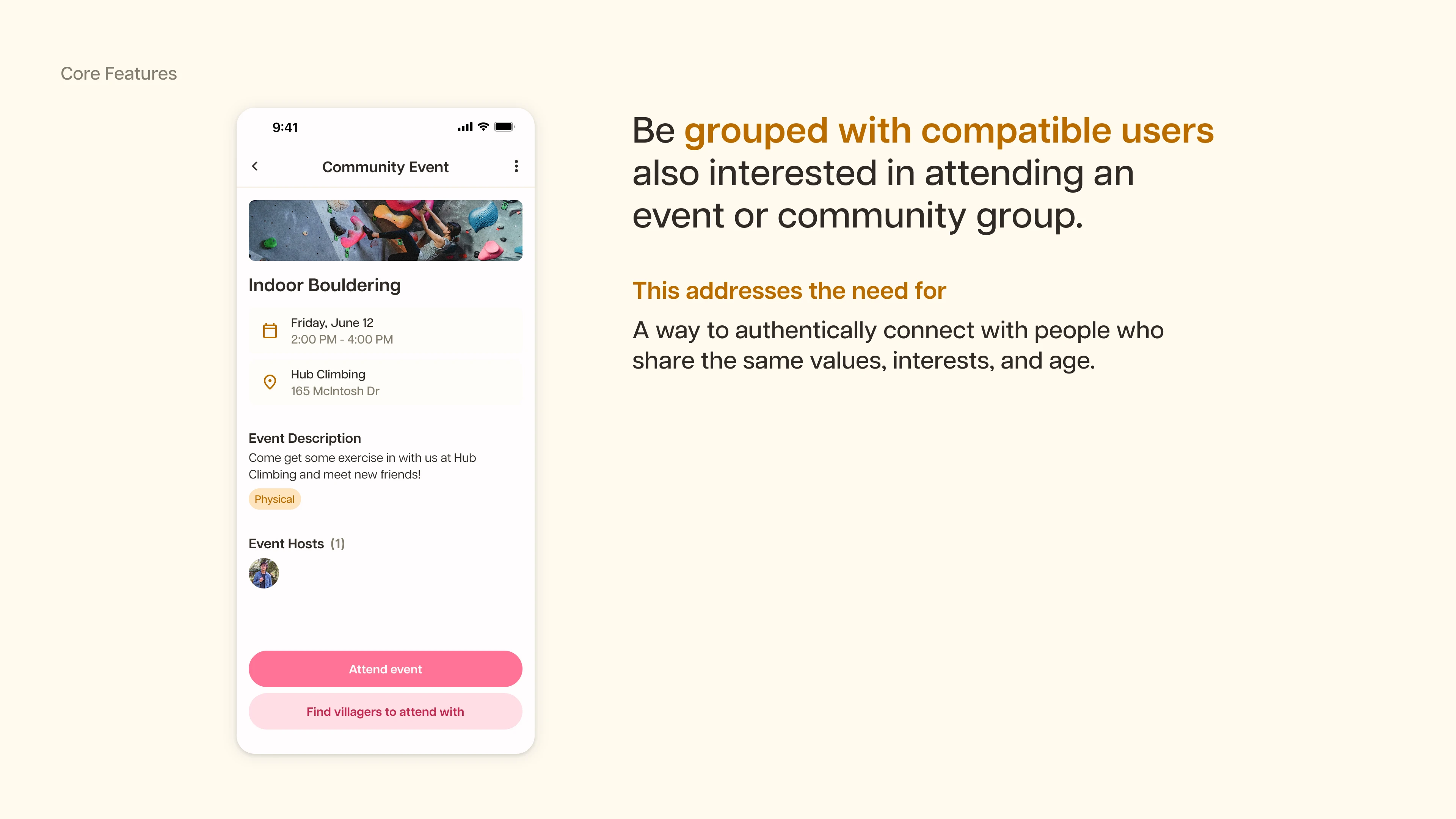
Along with the revised main feature, the supporting features are also informed by user needs.
Referring back to the user needs ensured design decisions were intentional and are useful to the target audience.
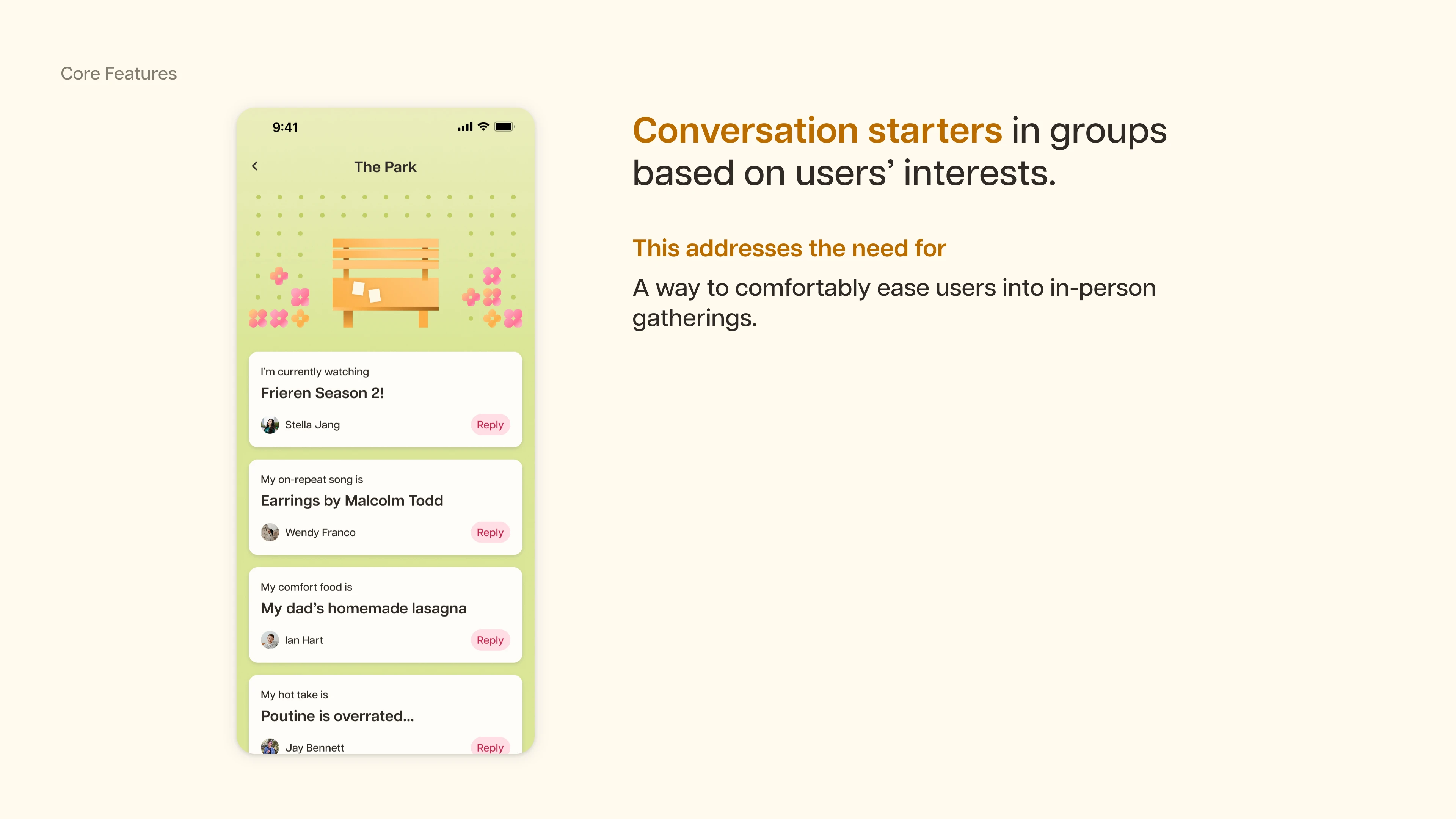
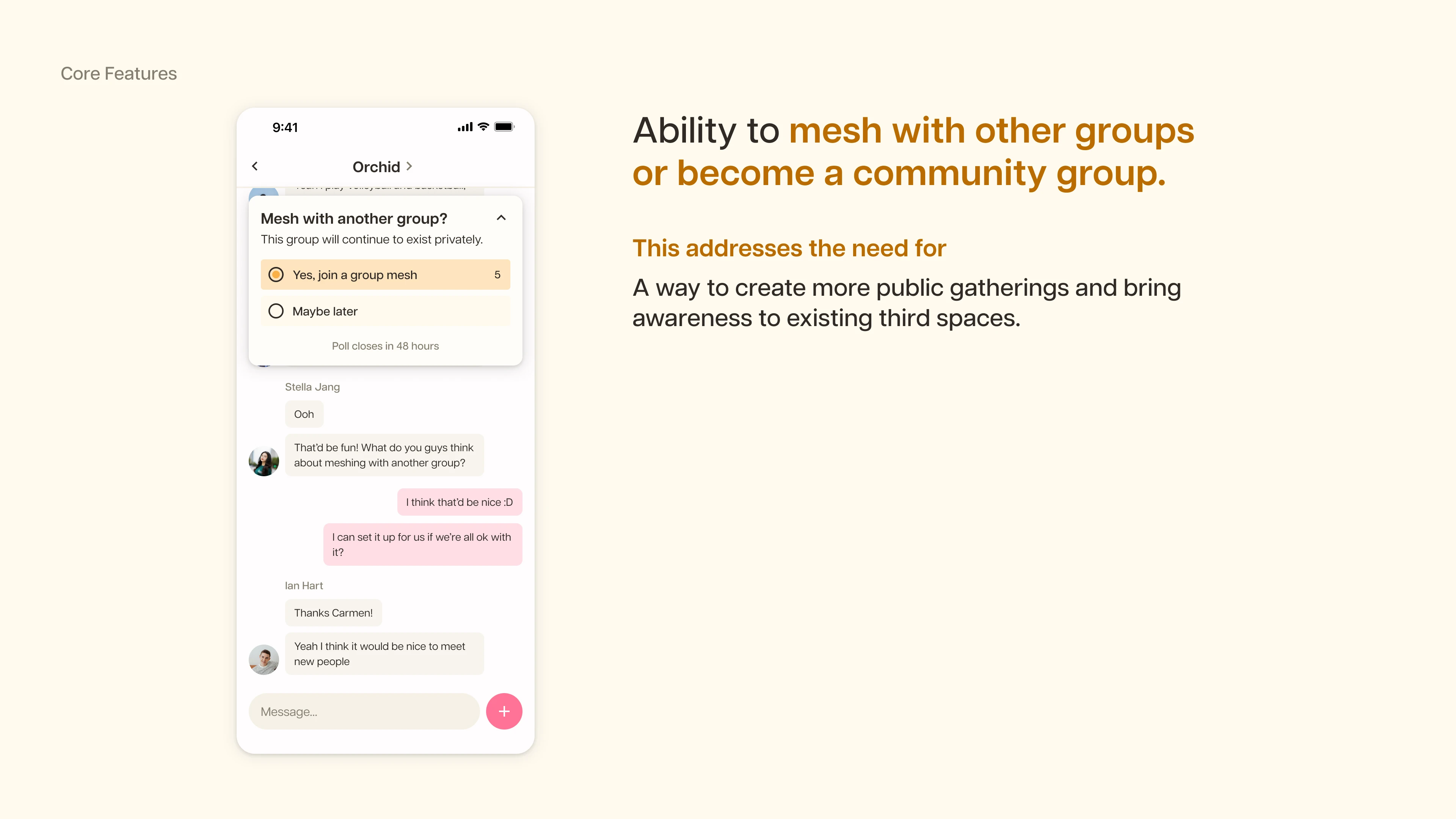
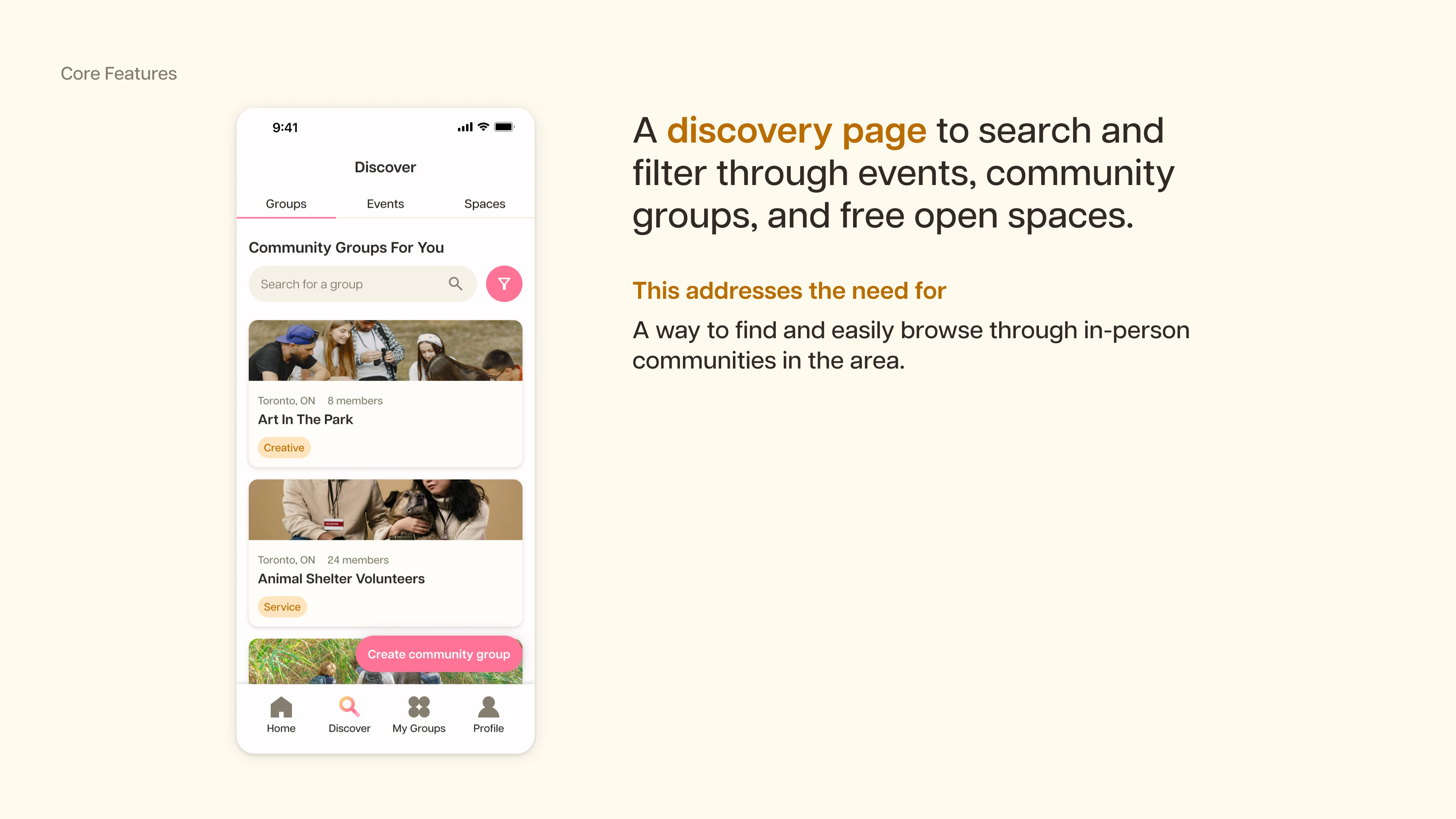
Building up a system that accounts for long-term group growth.
The final user flow is supported by the secondary user flows, which become methods of bringing awareness to existing community groups.
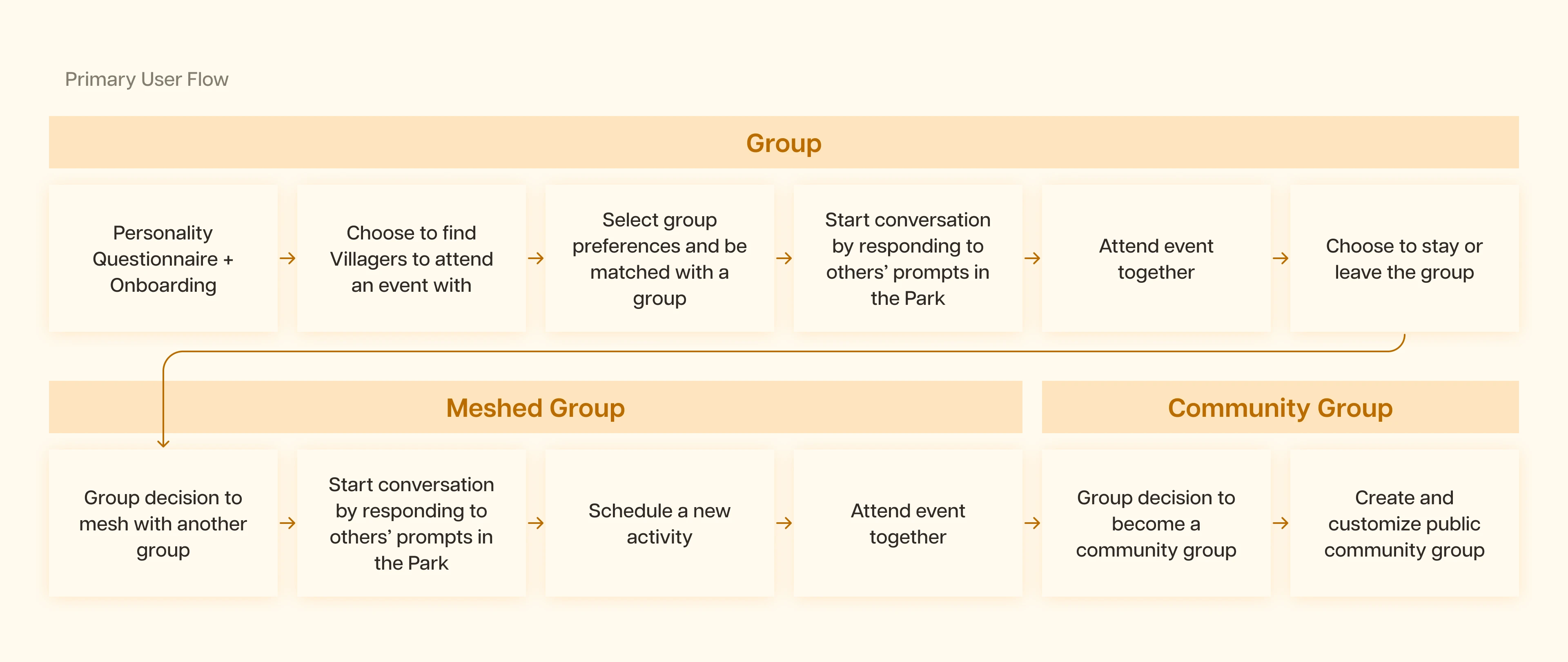
Zoom to view system map
Villager is an app that connects, grows, and sustains communities.
The platform ensures that not only is the act of finding in-person communities easy, but that the whole process is enjoyable.
Customized experience with the personality questionnaire.
Users take the questionnaire, a quick set of questions to better understand their interests, personality, and the area they're located.

Connect with others to attend events.
Users can choose to be grouped with people also attending the event they're interested in to get to know them in advance.

Ease into social interaction.
Provided conversations starters makes finding common interests less awkward.

Experience natural community growth.
Groups can choose to mesh with other groups, become public community groups, or stay as is.

Explore different opportunities to connect with others.
Users can join public community groups, attend events, and visit third spaces partnered with Villager.

Click through the walkthrough of the main user flow.
Research is continuous in the design process.
Throughout this project, I went back and forth between research and design to validate my design decisions. This highlighted the importance of not being too caught up with an initial idea, but rather let research shape the design as it goes.
While there are challenges with finding community, youth are resilient.
Through the research process, it was encouraging to know that the human desire for connection continues to thrive despite setbacks.